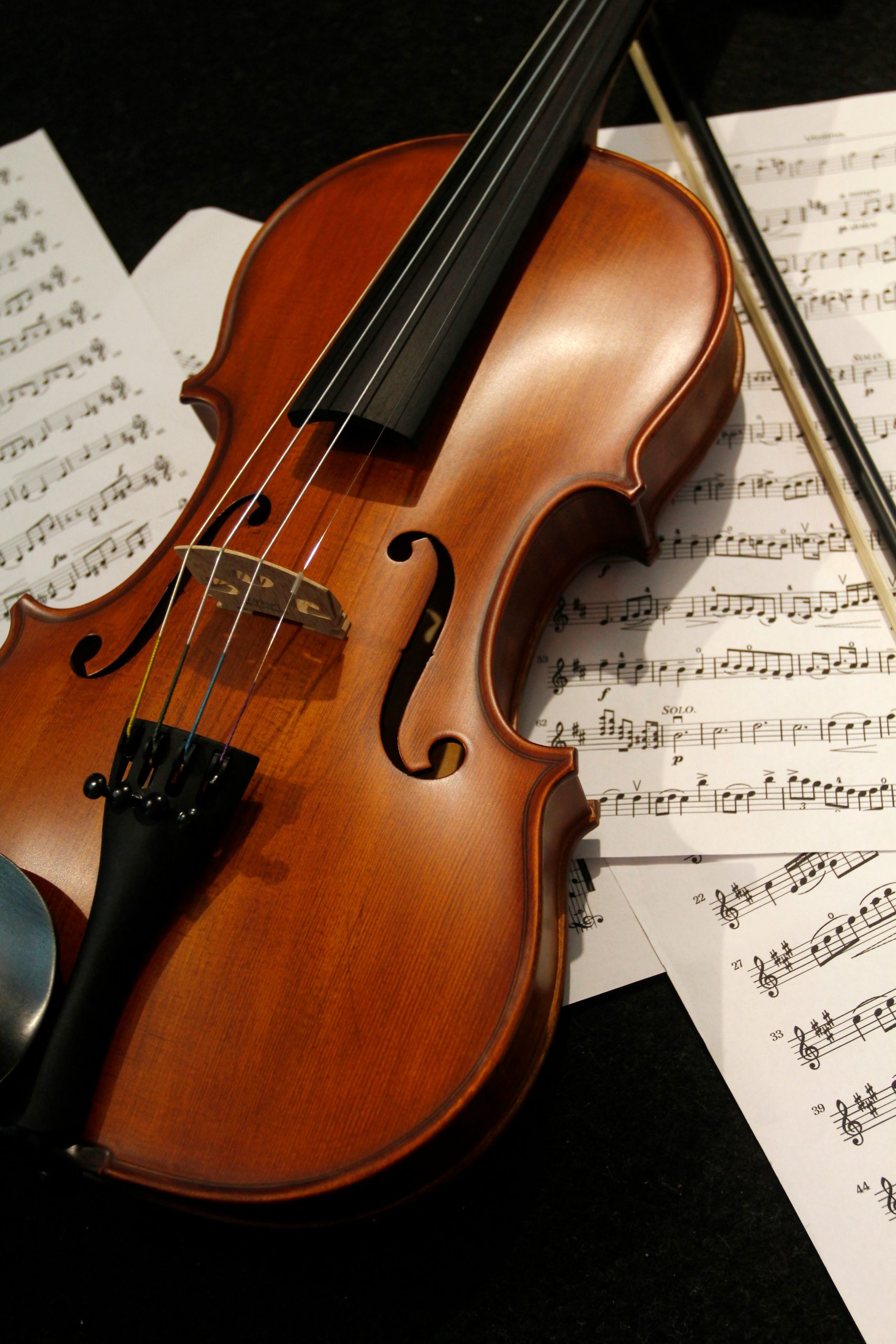
Who is the Best Violinist in the World?
One consequence of my having been involved in violin playing and teaching for so long is that people often ask me “Who is the best violinist in the world?” First of all, who on earth could possibly answer this question? After all, it’s not like sports, where the number of goals scored or runs batted in can be counted and tabled for each player.
Of course I have some notions as to who the contestants for best player might be, but I naturally cannot really know for sure (although I’m pretty sure I’m not in the running). More on this below…..
The second issue implied in our question could be “What are we really being asked?” Well, I think that perhaps the real question might be something along the lines of “Who is your favourite player?” I mean, after all, everyone thinks that their favourite player is also the best, right? Now, I would be prepared to take a crack at answering this one. I was once sitting with my son (also a musician and music teacher) for a half hour. We were offering our opinions as to which performer we felt gave the best reading of each of the major violin concertos. Now I can’t remember with any certainty what our choices were in all cases, but I know that we both felt that Leonid Kogan gave the best rendition of Paganini’s first concerto in D major, and that Jascha Heifetz (in the 1955 recording with the Chicago Symphony Orchestra under Fritz Reiner) was the best at handling the exceedingly difficult, orchestral conceived Brahms concerto, also in D major. Some of my own additional preferences include- in no particular order- Zino Francescatti in the Mendelssohn concerto (with the Cleveland Orchestra under George Szell), especially the lovely second movement, seemingly custom composed for Francescatti’s beautiful tone and elegant phrasing. I would also nominate Francescatti for the Saint-Sans B minor concerto (full disclosure: I had the good fortune of hearing Francescatti play this concerto at Place des arts in Montreal in 1972 or 1973), and also probably for the Symphonie Espaole by douard Lalo. The Tchaikovsky concerto in D major has been recorded countless times by many, many artists (Heifetz alone has left us three separate recordings). Perhaps a recording by any of the Soviet violinists, as led by David Oistrach, or one by Heifetz or Nathan Milstein (both Russian/Ukrainian by birth, although they became American citizens as adults) would fill the bill. And not to overlook a player who reached the very summit of violin playing (although he died young), I might mention Michael Rabin, who recorded the Tchaikovsky concerto in 1956 with the Philharmonia Orchestra under Alceo Galliera. I could of course once again mention Zino Francescatti, a player whose poise, balance and impeccable good taste are entirely characteristic of French violin playing at its best. But as perfect as Francescatti’s playing was at all times, I feel that perhaps this concerto requires a rougher, more “peasant fiddler” style of playing to be at its most effective, and maybe the Slavic fiddlers more reflect this quality. And let me state, once again, that the entirety of this article represents no more that my own conjectures and personal musings.
However, let us power on here, and consider the two concertos by Henryk Wieniawski. This pair of masterworks are a study in contrasts. The first, in F minor is seldom played, perhaps simply because it is just so difficult. I know of three recordings of this work, with one by the Soviet player Victor Pikaizen, a student of David Oistrach. You can hear the first movement of this fabulous recording on ritaviolin’s YouTube channel. Pikaizen recorded the work with the Soviet National Radio Service Orchestra; I’m sorry I don’t know what year the recording dates from. Then there is the fiery rendition bequeathed to us by Michael Rabin, who recorded the work in 1957 in the Walthamstow Town Hall with the Philharmonia Orchestra, conducted by Sir Adrian Boult. The last is a recording by Itzhak Perlman; however I am only familiar with the recording from a downloaded version on YouTube, so I’m unable to assess the full tonal characteristics of Perlman’s rendition. These are all amazing recordings, though I might have a slight preference for the Rabin rendition. The second Wieniawski concerto in in D minor, and, incidentally, this was the concerto played by Jascha Heifetz in his debut American concert at Carnegie Hall, New York in 1917. This concerto is just so beautiful, and so beloved of, well, really, all string players, that there is certainly no shortage of available recordings. However, out of the many splendid recordings of this concerto, I would single out the 1965 recording by Ida Haendel with the Prague Symphony under Vclav Smetcek. And just to make my own point of view concerning this concerto clear, if asked to pick one piece of music that best showcases everything that the violin is capable of, this would be my pick. With regard to the Bruch concertos, including the Scottish Fantasy- perhaps the finest of the four- there is a wonderful recording by the Italian violinist Salvatore Acardo available. Acardo, like Francescatti before him, is quite simply perfect as a violinist. I am told, furthermore, that he now plays on the Strad formerly belonging to Francescatti, though I have no way of verifying thing this.
Of course there are many, many more concertos that we have not considered, but could perhaps mention in passing. How about the Conus concerto, a truly lovely work in a late Romantic style, but did anyone besides Heifetz ever play it? We are also leaving aside the hundreds and hundreds of Baroque concertos by such fellows as Vivaldi, Corelli, Tartini, Nardini, etc., etc., along with the culmination of the Italian Baroque violin concerto, the three by J.S. Bach (in A minor, E major and the double in D minor). There is no shortage of recordings of these and other lovely works from this period, and indeed, the whole history and development of violin playing down to our own time is so tied in with and derivative of this period- especially the work of Arcangelo Corelli- that I think we should leave discussing the period for another occasion. But before we leave the subject of Baroque violin music, what about the six unaccompanied Sonatas/ Partitas composed by Bach? Well, the rendition I prefer, personally is the one by Henryk Szeryng, recorded many decades ago on the Columbia Odyssey label. In addition, and although I find his editing and fingerings hard to play from, the Schott edition (which Szeryng edited) is the main one I use in my own studio. Szeryng, naturally, tosses these works off with the greatest facility.
Moving into the classical period, we encounter the five concertos by Mozart. Once again, there are countless recordings available, and once again I find that I have a great fondness for an old one featuring the work of Henryk Szeryng. The concertos can be found on an old Philips recording from 1970, with the Philharmonia Orchestra, conducted by Alexander Gibson.
Last of all, what about the Paganini Caprices? Many, many violinists have recorded one of the twenty-four here and there; #24 in A minor is a perpetual favourite, and has served many other composers as a base for the composing of variations. I have read that Victor Pikaisen was the first artist to have performed all twenty-four in live concert, but I have no way of verifying this statement. I know of only two violinists who have recorded all twenty-four, I.e. Ruggiero Ricci and Michael Rabin, both Americans. Of course there may be others that I am unaware of.
Well, that’s about it for a quick overview. I know there are omissions in this article: what about the Sibelius concerto, which I confess I don’t understand too well, or the five concertos by Vieuxtemps? And then there is the concerto by Benjamin Britten, opus 15, the concertos by Stravinsky and Alban Berg, the two concertos by Shostakovitch. These are all stellar works, that I am still studying. And anyone who might still be reading this article is bound to ask “What about the Beethoven, opus 61?” Well, this is a particularly difficult work, I think in part because it is- like the Brahms concerto- orchestral music (rather than being derivative of violin virtuoso playing.) And there is, in my view, no obvious frontrunner among the artists who have recorded it. My love of the violin started in part with my love of Fritz Kreisler’s ancient reading of the work (available on CD in the Naxos Historical Recordings series) and continues down to this day, inspired by two truly great contemporary renditions of the work, one by Hilary Hahn and the other by Janine Jansen. For those interested in more historical recordings, Joseph Szigeti left two gems, one recorded in 1932, the other in 1947, both with the British Symphony Orchestra under Bruno Walter.
********************************************************
However, I have of not yet attempted to answer the original question asked in the title to this essay: “Who was (or is) the best violinist?” Well there is obviously no point in trying to evaluate the playing of those fiddlers who lived before recordings became possible. Was Paganini a better player than Heifetz? The question is obviously unanswerable, and so makes no sense. So we will confine ourselves to those performers who have left us credible recordings, or who are still working. With this caveat established, we must stop and remind ourselves that violin playing encompasses many aspects. Great soloists, who constitute only an infinitesimally tiny proportion of the world’s violinists, may also be great chamber musicians (think Heifetz, for example). Others work as concertmasters in major orchestras (Frank Huang- New York, Robert Chen- Chicago, Alexander Barantschik- San Francisco, and many others). Hundreds of good players work under these concert masters, a few go into conducting, and a large cohort become violin teachers. Or some mixture of the above, to be sure. All of these career paths require differing skill sets, and offer varying rewards.
I wonder if, rather than thinking in terms of individual players, we might not be better off thinking in terms of “schools of violin playing”? Now, it is well known that Russian culture has traditionally treated its artists and musicians very well. And why not? For so long music and art were seen as being in the service of the Tsar. In the more modern Soviet era, musicians in fact performed a similar role to Olympic athletes, i.e., as tokens of national prestige. So if Russia traditionally paid its musicians very well, it also worked them hard (In fact, leading Soviet violinists such as Oistrakh and Kogan tended to die young). If you combine this tradition of munificent rewards with the strict teaching methods generally in use in all European countries, then it’s not hard to understand how Franz Farga’s assertion may well be correct. As an aside, my own first teacher was a Frenchman of the old school. Now, I will admit that I had no more inclination to practice than any other Canadian youngster of my generation. This did not, however, discourage Monsieur H. from maintaining constant pressure on my young self, and, decidedly, any gaps in my scholarship were not for lack of trying on M. H‘s part, for he was an excellent teacher. However, I wonder whether today’s Canadian parents would tolerate my unleashing such torrents of abuse as I endured on their precious little darlings in my own studio? Well, I think probably not. However, I digress….
To return to the subject at hand, let us compare and contrast the Russian approach to music making- an approach which involves glorifying the State- with the North American approach, i.e., music as show business. Whatever else may be true, it is indisputable that the Russian approach is the more serious of the two.
In addition, there has sprung up- in particular in the last fifty years or so- a third approach to violin playing, a third “school”, if you like. This school is centered in East Asia. In the history of violin playing and teaching, has there ever been a “virtuoso factory” to equal South Korea? Or Singapore? Or Japan? China? Well, if there has been, I have never heard of it. And it you don’t know what I’m talking about, Google any of the big violin competitions (Queen Elizabeth, Ysaye, Wieniawski, etc.), and you’ll soon see what I mean.
Well, it has come to the point where I feel I must try to answer the question posed in the title to this essay. However- as I pointed out very close to the beginning- the question really should be rephrased from “Who is the best?” to “Who is my favourite violinist?”, as every one of the performers mentioned in this essay is unquestionably a superlative player. It must be obvious from this text that I am very fond of the work of Zino Francescatti (When I was seventeen, he was my favourite); along with Salvatore Accardo, he represents for me the very finest in Western European playing. Now as far as the North American players are concerned, I might perhaps single out Isaac Stern, if for no other reason than the exquisitely beautiful tone he was capable of producing. (I would nominate his rendition of Bloch’s Three Pictures of Chassidic Life as among the finest examples of his playing). Henryk Szeryng of Mexico also stands very high in my estimation. However, my own personal choice- and here, once again, I am in agreement with Farga- would be drawn from the pool of twentieth century Soviet violinists. And this is where it gets tricky, for, in spite of the general acknowledgement that David Oistrakh was the pack leader overall, they were all so fabulous that it’s not an easy choice. However, I will admit to an inordinate fondness for the playing of Leonid Kogan, and if I had to pick one fiddler to listen to for the rest of my life, Kogan would be the one.[2]
So there you have it, What do you think? If you would like to tell me how completely off base I am, just send me an E-mail. I read and respond to all letters, and would enjoy hearing from you.
Thank you once again for your attention to these musings, and as the clever chaps at TwoSet Violin would say “Now go practice!” Cheers!
Notes:
“Yehudi Menuhin’s playing is acclaimed the greatest revelation of the age; and yet, the Slavonic fiddlers (David Oistakh and his pupils seem to me, to be standing on a higher plane.” Franz Farga, Violins and Violinists, Barrie and Rockliff, The Cresset Press, London, 1969. Page 221.
[2] This is what Farga had to say about Kogan and his playing: : “Leonid Kogan comes from the Ukraine where he was born in 1924. His talent revealed itself at an early age when he was accepted at the Moscow Conservatoire. He continued his studies under Abram Jambolsky. In 1936 Jacques Thibaud prophesized a brilliant future for him. In music competitions held in Prague and Brussels after the Second World War he came away with first prizes. His playing is exciting because of the beauty of his tone, his technique is decidedly of a superior order, and added to this is his refined sense of style. In Eastern and Western Europe as well as in China and Canada this artist has celebrated real triumphs.” Opus cit., Page 215.